Co-Managed IT · Buffalo & Rochester
For businesses in Buffalo and Rochester that already have an IT person or team. You keep the work your people do best, and we take the work that stretches them thin: monitoring, after-hours coverage, security, escalations, and projects. One shared set of tools and documentation, with a clear line on who owns what.
How It Works
A clear split, shared tools, and coverage when your people are off, so nothing falls through the gaps and nobody burns out.
No gaps, and no stepping on each other.
Monitoring, ticketing, and docs everyone can see.
Your team gets to switch off.
Extra hands and specialist depth when you need it.
Is It a Fit?
Co-managed IT isn't for every company with an IT department. Tick the ones that sound familiar.
Tick any that apply to see where you stand.
A short conversation is usually enough to tell whether it makes sense, and what the split might look like. We'll tell you honestly if it doesn't.
(716) 463-5111Most internal IT people are doing three jobs at once: answering the help desk, keeping servers and the network running, and trying to find time for the projects leadership keeps asking about. Security reviews, patching and documentation slip because something is always on fire. And when that person is on vacation or out sick, nobody covers.
Co-managed IT keeps your internal staff in charge and adds a team behind them. They keep the relationships, the knowledge of your business and the work they are best at. We pick up the work that is better done at scale or around the clock. We already work this way with in-house teams, including as a dedicated escalation partner and in sitting CISO roles.
It is also a fit for growing companies that have one IT person and are not ready to hire a second, and for groups where head office has IT staff but branch offices do not.
Who Owns What
Every co-managed arrangement starts with a written split of responsibilities. It's different for every company, but a common starting point looks like this.
Your team
Both teams
Buffalo IT Services
Why we write it down: to avoid two failure modes
Because each side thinks the other has it.
Because nobody checked.
We revisit the split as your needs change.
Shared Tools
Co-managed IT only works if both teams see the same picture. We agree on the tools up front.
If your team already has tools it likes, we start there. Where there are gaps, we fill them.
Access uses separate named accounts and multi-factor authentication, so every change ties back to a person.
Remote monitoring & management
One agent on each computer and server, reporting health, patch status, and alerts to a console both teams can use.
Ticketing (PSA)
Requests and incidents are logged, assigned, and tracked in one place, so nothing is lost between an email to your IT person and a call to us.
Documentation
Network diagrams, passwords in a secure vault, configurations, and procedures in one shared system, updated as we go, not as an afterthought.
Security tools
Endpoint protection, email filtering, and backup consoles, with alert routing agreed so the right person gets woken up at 2 a.m.
We agree escalation paths both ways. Your team can escalate to ours when a problem needs a second pair of eyes, a specialist skill or more hands, and we escalate to yours when something needs a business decision or inside knowledge.
Outside business hours, our help desk and monitoring cover your environment, so an alert on a Saturday is handled without calling your IT person at a family event. When your staff take vacation, we cover their queue using the same documentation and tools.
After each significant incident, both teams review what happened and update the documentation, so the next one goes faster.
Projects & Security
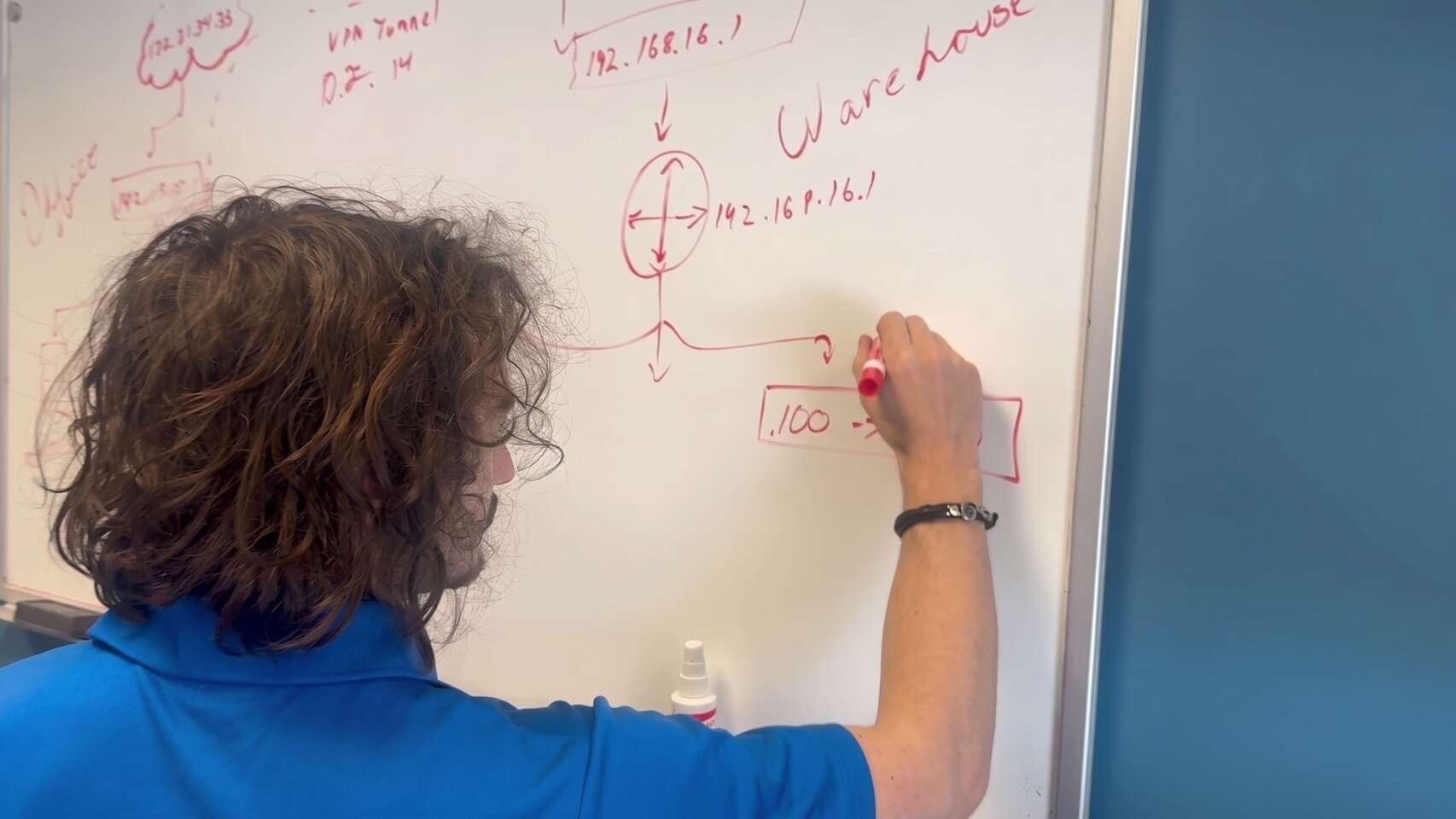
Projects and security are the two places internal teams most often fall behind. Most know what they should be doing but can't find the hours. That's where we come in.
Projects
See our network management and structured cabling pages for examples.
Security
We can run the security work your team doesn't have hours for:
Our cybersecurity page covers the layers we put in place.
Common Questions
Quick answers to what internal IT teams and their managers ask us most before getting started.
Not sure if it's a fit?
A short conversation is usually enough to tell. We'll be honest if it isn't.
(716) 463-5111No. The point is to make your internal team more effective, not to replace them. They stay in charge of IT for the business, and we support them.
Whatever you decide. Some companies keep their internal IT person as the first contact and send overflow to us. Others route all requests through one ticketing system and assign them from there.
Not necessarily. We look at working with the tools your team already uses first, and fill any gaps in monitoring, ticketing, documentation, or security.
Yes. That's one of the most common reasons companies choose co-managed IT. We use the shared documentation and tools to pick up their queue.
No. We don't lock clients into long-term contracts.
Schedule a free remote or on-site IT consult. Tell us about your business and the services you need – response times are typically under three hours.